


7 Simple Healthy Living Habits for Families

Updated: Mar 21
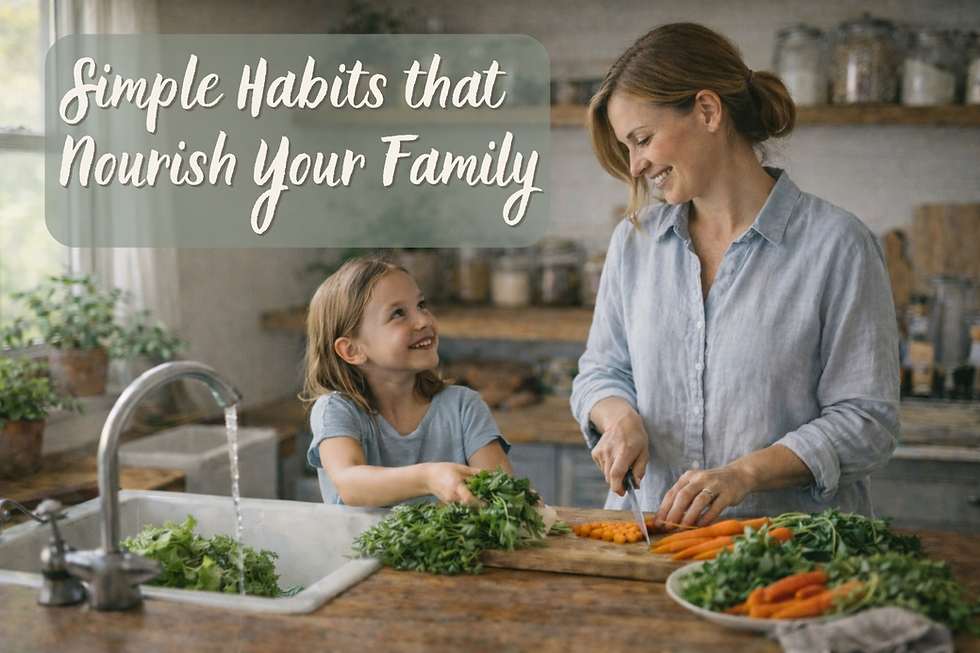
Are you happy with your family's daily habits? Do you sometimes wish they could be a bit healthier but aren't quite sure where to start? Below are a few simple shifts you can begin making today.
I sometimes get nostalgic about life before kids. My husband and I had the worst habits! We stayed up late watching movie marathons and ordered takeout several times a week—so often that the server at our local Chinese restaurant would hand us our styrofoam containers and grin, “See you tomorrow!” The foods we ate at home weren’t much better. If we had owned stock in Häagen-Dazs, we probably would have been rich.
But when our son was born, we were forced to make a shift. When he was able to eat solids, we discovered that he had food allergies. Oddly enough, the foods he reacted to were the very foods that I ate a ton of while pregnant with and nursing him. Later, I discovered the underlying cause (I’ll share more about that in a future post). But because of his allergies, eating mindfully and healthfully became a major priority for us. I suppose you could say his allergies were a blessing in disguise.
We made changes over time and eventually evolved to where we are today, which consists of eating whole foods, home-cooked meals, and much of it homegrown or locally sourced. This might sound unattainable, but I promise that it's not. And we do follow the 80/20 rule (80% "healthy" and 20% flexibility) so as to retain some sense of sanity.
If I were to do it all over again, here are the top 7 things I would change right away:
(Some links below may be affiliate links, which means I may earn a small commission at no extra cost to you. I only share products I personally use or trust.)
#1 Drink more water.
I know so many people who don't like the taste of plain water, so this might be something they shy away from. To make it more palatable, try simple add-ins: citrus slices, a splash of juice (pomegranate is delicious and pretty), crushed berries, fresh mint leaves, electrolyte powder (read the ingredients on these; some brands are cleaner than others), even steeping a favorite flavor tea bag in cold water for an hour. The standard recommendation is to drink half your body weight in ounces. I think there's flexibility with that, especially if you consume foods high in water (which count towards hydration). Such foods include cucumbers, celery, tomatoes, watermelon, grapes, strawberries, pineapple, other melons, and stone fruit.
#2 Cook simple whole foods.
This is easier than you think. You do NOT need to be a gourmet chef. Some simple ideas: Instead of a bag of french fries, buy some potatoes or sweet potatoes, cube them, set them on a roasting pan, drizzle with olive oil, salt, and a little garlic powder and paprika. Then roast at 400 degrees for 30-45 minutes. Voila! Homemade fries. Instead of Mexican takeout (what I subsisted on all throughout my 20's), pan fry some grass-fed ground beef with tomatoes, peppers, garlic, onions, and chili powder and serve with rice and beans. I also love roasting chicken thighs (with bone and skin) and serving with roasted root vegetables. When we get a good cut of stew meat (grass-fed chuck roast is my go-to), I cube it and throw it in the Instant Pot with a taco seasoning packet. About an hour and a half later it’s ready to serve over rice with a side salad. These are all delicious, hearty meals that often leave leftovers which can be eaten the next day for breakfast or lunch. (Yes, my breakfasts are sometimes not very breakfast-y.)
#3 Walk outside daily, especially after meals.
Gentle movement after eating helps your digestion and can moderate blood sugar spikes. Even 5-10 minutes up and down your block or yard if you have room feels so good. And if the weather isn't ideal, marching in place (not running) does the trick, too. I've read that calf raises can also help balance blood sugar after meals.
#4 Reduce household toxins.
Oh, my goodness. I used to love those smelly vanilla candles. But many scented candles release chemicals that aren’t great to breathe in. What we breathe in and what makes contact with our skin goes into our bodies. The world is toxic enough without us knowingly putting chemicals into our bodies. Some easy switches: Instead of Ajax for cleaning, use baking soda and vinegar. Replace drying antibacterial soaps with liquid castile soap (health food stores often carry their own in-house brands). You can make your own foaming soap by mixing liquid castile soap and water at a 1:3 or even 1:4 ratio and storing in a foaming soap dispenser.
#5 Prioritize sleep.
This can be hard if you have little ones, especially if they're still night nursing. But if you actually sleep when the baby sleeps and take naps during the day when possible, you'll be much better off. Once the kids are older, however, it gets tempting to let them stay up late and watch movies or just hang out. This is a slippery slope. Sleep is so important for a variety of reasons. Without adequate sleep, we get cranky, lose focus, forget things, and throw off our hormones—and hormones affect everything from our digestion to our skin to our cognitive functioning.
#6 Regulate the vagus nerve. (The what??)
This is about calming the nervous system, and I wish I had learned about it sooner. The vagus nerve connects your brain with your heart, lungs, and digestive system and helps you go from fight-or-flight mode to a rest-and-restore state. When it’s supported, we can better regulate our emotions and return to a sense of safety more easily. One simple way to do this is slow “balloon” breathing—breathe in through your nose for four counts, then out for six through your mouth, as though you're blowing up a balloon. Humming or singing also helps, because the gentle vibration in the throat stimulates this calming nerve. You can also put your feet up on the wall while lying in bed. This tells the body there is no danger and is perfect right before bedtime.
#7 Learn emotional literacy.
OK, I realize this is starting to sound less like a healthy living post and more like a mental health post, but hear me out: Our mental wellbeing absolutely 100% affects our overall health. One of the simplest ways to learn to express emotions in healthy way is to name what you're feeling—words like sad, frustrated, nervous, or excited. When we can label an emotion, it becomes less intense and much easier to work through it instead of bottling it up. It also helps to encourage “I feel” statements, like “I feel frustrated by last-minute changes,” so we learn to share emotions without blaming someone else. A daily check-in at dinner can also be helpful. This is where everyone shares one thing that made them happy and something that felt hard that day. Teaching your family how to express feelings in a healthy way helps prevent bottled-up feelings, which can show up as physical maladies later on.
Simple Tools That Make Healthy Habits Easier
You don’t need a kitchen full of fancy gadgets to live healthier. But a few well-chosen items can make daily habits much easier to stick with. Here are a few household swaps that made a big difference for our family:
Plastic water bottles → stainless steel water bottles
To avoid some of the hormonal concerns around plastic, we switched to cute stainless steel water bottles like these. They're durable and my daughter loves hers!
Non-stick pans → cast iron or stainless steel cookware
We tossed our non-stick pans when we found out they were toxic to our pet cockatiel. That's when I started looking more deeply into simpler, sturdier options, such as cast iron. I have used cast iron for decades but this has got to be my very favorite—a mini cast iron pan just for my daily fried eggs!
Plastic containers → glass food storage containers
I held on to my mom's hand-me-down Tupperware for years before buying my own storage for leftovers. Glass storage containers like these are stackable and last a long time without worrying about chemicals leaching into your food.
Microwave → Instant Pot
When I learned what the invisible waves were doing to our brains and bodies, we said goodbye to our microwave. I still wanted a way to save time in the kitchen, so I invested in an Instant Pot. Hands-down, it's the best kitchen gadget ever. I use it for everything—broth/soups/stews, beans, and even whole chickens!—it makes hearty dinners possible without spending hours in the kitchen.
Plastic/melamine dinnerware → glass plates, bowls, cups
These are sturdier long term and avoid many of the concerns associated with plastic. We love our French Duralex "bowl-plates" or Calotte plates—they have high sides to help keep food from sliding off onto the table. If you're in the toddler years and wary of glass, stainless steel and enamel steel dinnerware are available.
Healthy living doesn’t have to mean overhauling your entire life overnight. Small, mindful changes add up over time. Pick one or two habits to start with, and go from there. Your future self—and your family—will thank you.
***
Thank you for reading. I’m grateful you spent a few moments here, and I pray this message blesses you. My heart here at Homegrown Legacy is to share biblical encouragement, healthy living ideas, and practical ways families can build stronger, more resilient lives.
If you’d like to stay connected and receive occasional encouragement and new posts by email, I invite you to join the Homegrown Legacy newsletter.
Comments